


Life Online – Young People’s Voices
Listening across Dyfed-Powys to understand how online life shapes young people’s world – the good and the bad.

Client
Ceredigion County Council
Dyfed-Powys Police – Serious Violence Duty
Sector
Public
Partners
Emma Chivers – Youth Work Leadership Lab
Services
Service Design
Digital Youth Work
The Life Online Discovery Report explores what being online really means for young people today – the positives, the pressures, and everything in between.
Commissioned by Ceredigion Council, delivered in collaboration with the Youth Work Leadership Lab, and funded through the Serious Violence Duty, this Discovery piece of work is the first step in the Service Design methodology. The goal: to listen, learn, and build understanding before designing any interventions or solutions around online harms.
It forms part of a wider strategic response with the Dyfed-Powys Serious Violence and Organised Crime Partnership and supports Ceredigion Council and its Youth Service’s aim to recognise that what happens in digital spaces can spill into real life, and to make sure young people get the right support early on.
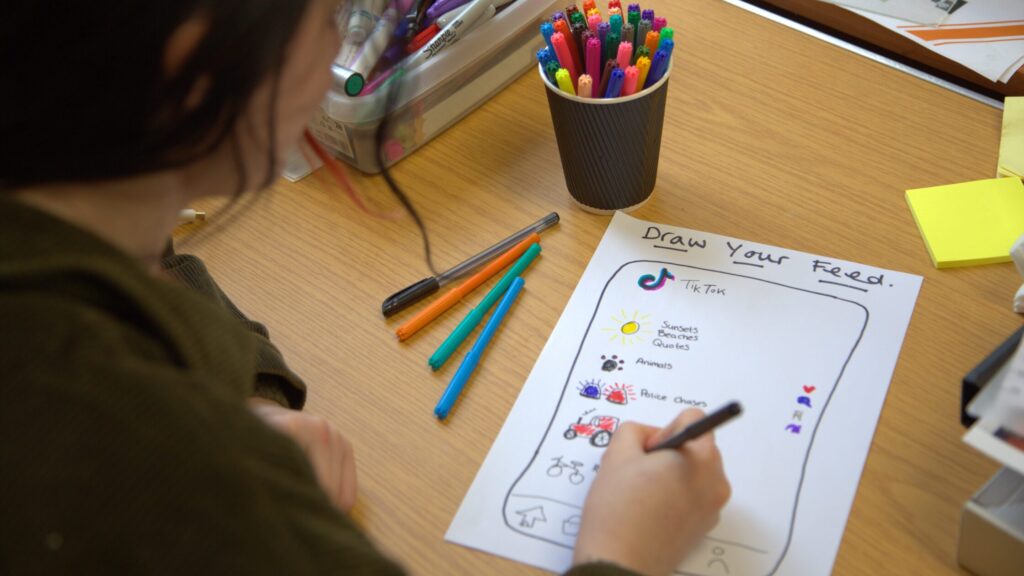
Working across the Dyfed-Powys area, we spoke with hundreds of young people about their everyday online lives – from TikTok and gaming to learning, friendship, and mental health – as well as the professionals who work with and support them. We took these insights, analysed them, and brought them together in a Discovery Report.
What We Found
Online spaces are central to young people’s lives, shaping how they learn, communicate, and express themselves. Most said they spend the majority of their online time scrolling on social media – with TikTok leading the way – and many described it as a place for creativity, humour, and connection. Nearly half said being online makes them feel “mostly good”, and one in five said online content had changed their behaviour in a positive way, from learning new skills to developing healthier habits.
But it isn’t always positive. Almost half (47%) had seen harmful or upsetting content, one in three had experienced mean comments or bullying, and one in four received unwanted messages from strangers. Many said reporting harmful content doesn’t help, and 45% had come across extreme or hateful material.
Professionals saw the picture differently. While young people recognised both positives and risks, not a single professional described the impact as “mostly positive.” Over a third said the online world was mostly negative for wellbeing, and a quarter said the same for behaviour. Many also told us they need more support to understand platforms, algorithms, and online trends – reflecting the gap in understanding between generations.
Why It Matters
These insights are helping Ceredigion Council and partners design better responses to online harms and digital wellbeing. The findings show that adults need to stop treating online life as all bad – for young people, it’s also where they learn, grow, and connect.
Our recommendations focus on bridging that gap. We call for co-designed solutions that bring young people’s lived experiences together with professional expertise, and for a digital youth work offer that takes trusted support to the platforms young people already use.
We also recommend making media literacy an ongoing part of learning, helping both young people and adults build critical thinking about algorithms, misinformation, and online influence. And we need to equip parents, teachers, and youth workers with the training and confidence to have open, judgement-free conversations about life online.
These insights lay the groundwork for future work to strengthen digital wellbeing and positive online experiences across Dyfed-Powys.
Turn Insight into Action
We collaborate with organisations to gather insight and turn it into action – co-designing inclusive, accessible, and people-centred projects and services. Get in touch to explore how we can work together.

